
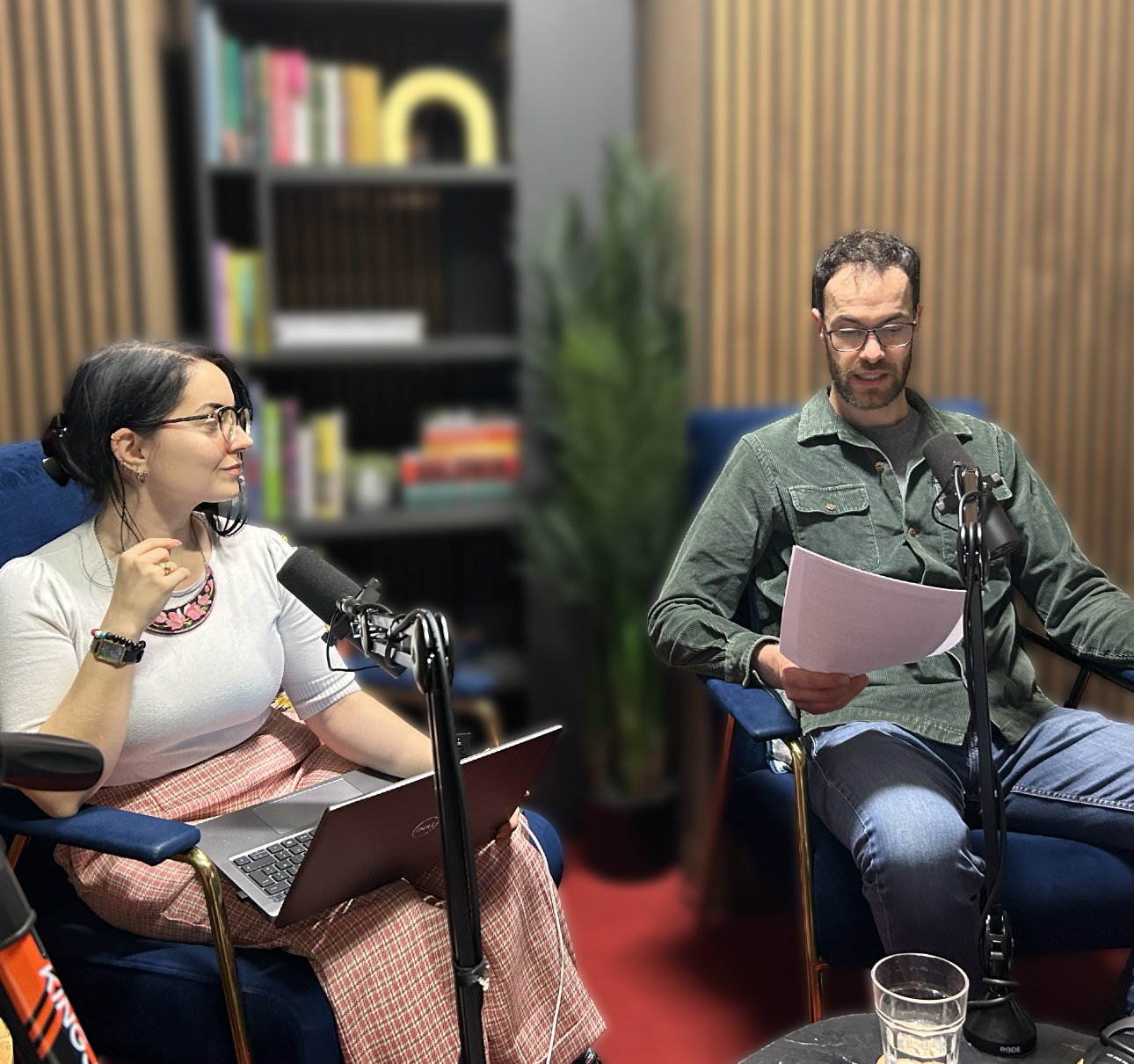
Integrity’s Principal Expert in Monitoring, Evaluation, and Learning (MEL), Lamia Renaud, joined the panel at ‘Evaluation at the frontier: the new FCDO evaluation strategy and dealing with change and complexity’. The UK Evaluation Society partnership event on 16 September marked the start of the Foreign, Commonwealth and Development Office (FCDO) Evaluation Strategy 2026–2030. Lamia joined speakers from the FCDO Evaluation Unit and British Council to discuss what the strategy means in practice. In this blog, she reflects on some key discussion themes.
Addressing complexity through PMEL
I enjoyed exploring the role portfolio MEL (PMEL) providers can play in supporting country teams to move beyond programme-level monitoring towards evaluative thinking. As the challenges we seek to address become increasingly complex, our approaches to evidence and learning need to evolve in response.
A recurring discussion point was that development outcomes rarely emerge from a single intervention. They are often the product of multiple programmes, partnerships, funding instruments, diplomatic efforts, technical assistance and influencing activities working together within a broader system. As the FCDO panellists highlighted, many of today’s most pressing challenges cannot be solved through one programme. Change happens through the interaction of investments, relationships, policy engagement, and local actors operating at different levels.
This reality is reflected in the evolution of FCDO evaluation strategy, which extends beyond traditional aid programming to encompass diplomacy, foreign policy, security, and broader UK influence objectives. The challenge is understanding how these different levers of influence interact and contribute to change.
This makes portfolio coherence a vital area. PMEL can help test whether diplomatic engagement, development programming, and partner engagement efforts are aligned with a common set of objectives and, critically, whether they reinforce one another in practice. To do this effectively, evaluations need a clear strategic framework. This might be a country plan, embassy-level portfolio theory of change, or another strategic framework that explains how different interventions are expected to contribute to shared outcomes.
Designing MEL around decision-making rather than reporting
Evidence generation often follows a fixed timetable which means adapting evaluation and evidence workplans, so they align with key decision points across FCDO and other HMG departments. In contexts such as Ukraine and Afghanistan, Integrity structures FCDO PMEL – including third-party monitoring (TPM) and evaluative activities – around specific programme and policy decisions. Rather than producing evidence according to a predetermined schedule, we work backwards from decision-making moments. This approach applies equally in Pakistan, where Integrity’s MEL expertise supports a portfolio of individual projects. It helps ensure that evidence is available when it is most useful, increases engagement from programme teams, and, ultimately, enables MEL to inform real strategic choices and programme adaptations, rather than simply generate retrospective learning. For example, our Pakistan team pivoted in response to destructive flooding in 2025, initiating TPM across flood-affected districts, to ensure the Building Resilience and Addressing Vulnerability to Emergencies (BRAVE) programme’s rapid response was grounded in evidence and accountability.
Localisation and power
We need to think critically about the role we intentionally create for local partners within programmes and portfolios. What do meaningful partnerships look like in practice? How do local organisations contribute to shaping priorities, generating evidence, and interpreting findings? What new MEL and evaluation needs emerge when power, decision-making, and accountability are distributed differently? These are not simply implementation questions, they are evaluation questions too.
Where PMEL can make transformational contributions
By helping organisations understand how different interventions work together, strengthening coherence across portfolios, and ensuring that evidence is available when decisions need to be made, PMEL can help embed learning into the way organisations operate. This can be achieved through dedicated PMEL programmes, and also through integrated portfolio approaches. Ultimately, the goal is to move beyond evaluation as a discrete activity, towards a culture where learning and evidence are woven into everyday practice.
Embracing complexity through evaluative thinking
The future opportunity is not simply to conduct more evaluations. It is to create portfolios, programmes, and institutions that think evaluatively from the outset, generating evidence continuously to support adaptation, learning, and strategic decision-making.
An encouraging aspect of the conversation was the sense that the sector is becoming more comfortable with complexity. Complexity is not an excuse to avoid scrutiny or settle for weaker evidence. It challenges us to develop robust, nuanced, appropriate approaches for understanding change in the real world. Questions of contribution, influence, adaptation, and systems change may be difficult to answer, but they remain critically important.
The discussion indicated an appetite across the sector for this journey. I’m grateful for the opportunity to share the panel with a fantastic group of speakers and engage with an audience that brought thoughtful questions and perspectives.
Watch the discussion panel in full here.
Latest Posts




Sustainability, Accountability, Prosperity
At Integrity much of our work contributes to the transformation of conflict, recovery from natural or man-made disaster, economic regeneration and the effectiveness and accountability of aid and assistance.
Email us at [email protected] to discuss how we can support your programmes....